Technical Proficiency
Curriculum evolves from where you start. Prereq options for nonengineers and nonbiologists prepare you for the core classes.
Customize your degree through electives, internships, certificates, minors, and research projects.

Register for Biotech Nexus
RegisterPreparing to make advances that transform the world
Attend an Information Session
Register here for our next online information session.
The basics at-a-glance
Degree earned: Master of Science in Biotechnology
 LocationNorthwestern University’s Evanston campus Access to 100+ nearby leading research labs |  Timing15-21 months full-time (depending on optional six-month internship) 6 months of full-time research included Classes start in September |  Class SizeCohort of 30-40 students Students’ undergrad degrees are primarily biology, engineering, or other science majors |  AdmissionsApplication deadlines Priority deadline: March 15 Final deadline: May 31 Application opens September 1 |

“ MBP students are definitely some of the brightest and talented students I have ever worked with, and I am impressed with their level of training and strong aptitude to learn.”
Read more
“ MBP provides many different opportunities depending on one’s interest. It is a great starting place for someone interested in working at a biotech or pharma company, pursuing a PhD or even working in consulting.”
Read more
“ The Master of Biotechnology program at Northwestern appealed to me because it gave me the freedom to choose specific courses and tailor my curriculum based on my interests and future goals.”
Read more
“ What drew me to MBP was its focus on research. As someone who did not have any lab experience prior to joining Northwestern, I wanted to be able to have a fully immersive education where I not only learned about topics in biotech in the classroom but also had the chance to practice what I was learning in the lab.”
Read more
“ The opportunity for MBP students to showcase their work to industry professionals is important for developing our scientific communication skills. No matter what job or career we end up in, effective communication is one of the most important skills to have.”
Read more
“ You have to be able to navigate complex relationships with colleagues and clients to be successful in consulting. In addition to having knowledge, you need to have good emotional intelligence. MBP prepared me well for this and helps me stand out at work every day.”
Read moreUnique program features
Northwestern aims to ensure its graduates leave with competencies that satisfy the demands of a wide variety of jobs within biotechnology and related industries (including consulting).
In addition to core coursework covering biology, bioprocess engineering, and innovation/business, students develop sought-after learning, problem-solving, and soft skills through extensive laboratory research, practical experience, professional connections, coaching, and workshops. This combination of skills not only defines the MBP graduate, but prepares them for the ever-increasing career options in this field, or to further their education through a PhD, MD, or JD.
Curriculum evolves from where you start. Prereq options for nonengineers and nonbiologists prepare you for the core classes.
Customize your degree through electives, internships, certificates, minors, and research projects.

Our research extends beyond the technical science. Learn the creative and critical thinking skills necessary to address open-ended questions and hard-to-find solutions.
Choose a research project from one of 12 industry-relevant research areas and graduate with an unparalleled level of research hours (6 months) conducted in world-class facilities.

Choose internship and co-op opportunities with companies from around the world.
Get a feel for working in industry through biotech hub site visits.
Grow your network through panels, meet-and-greets, and our annual MBP biotechnology event. Make connections through MBP’s industrial advisory board members.

Advance your career by learning professional enabling skills such as communicating, decision-making and presentation development. Reinforce these skills while conducting research.
Receive coaching and individual counseling from MBP staff and professional development events. Present your research findings to the MBP Industrial Advisory Board.
The relevance of research
Go beyond learning advanced laboratory techniques and gain a more holistic understanding of research as you carry out hands-on projects in the laboratory and practice a suite of professional and soft-skills. Our unique approach teaches you to identify the right problem and seek appropriate and thoughtful solutions so you can own your project beginning to end.
After logging 6 months of full-time research in world-class facilities, including the Falk Center for Molecular Therapeutics and the Shirley Ryan AbilityLab, your collaborations with leading faculty will prepare you for positions in laboratories, consulting, manufacturing, government, and more.
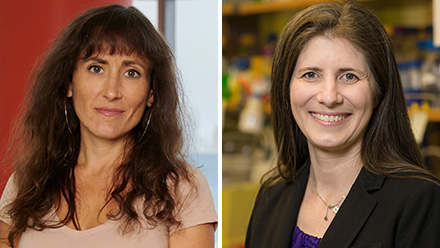
Brenna Argall and Danielle Tullman-Ercek are part of AIMBE’s College of Fellows Class of 2023
Read More